
FWC approves final
proposed rules for
highly regulated
black bear hunting
HAVANA, FL – At this week’s Commission meeting in Havana, Commissioners of the Florida Fish and Wildlife Conservation Commission (FWC) voted to approve amendments to bear hunting rules, which will take effect during the 2025 hunting season.
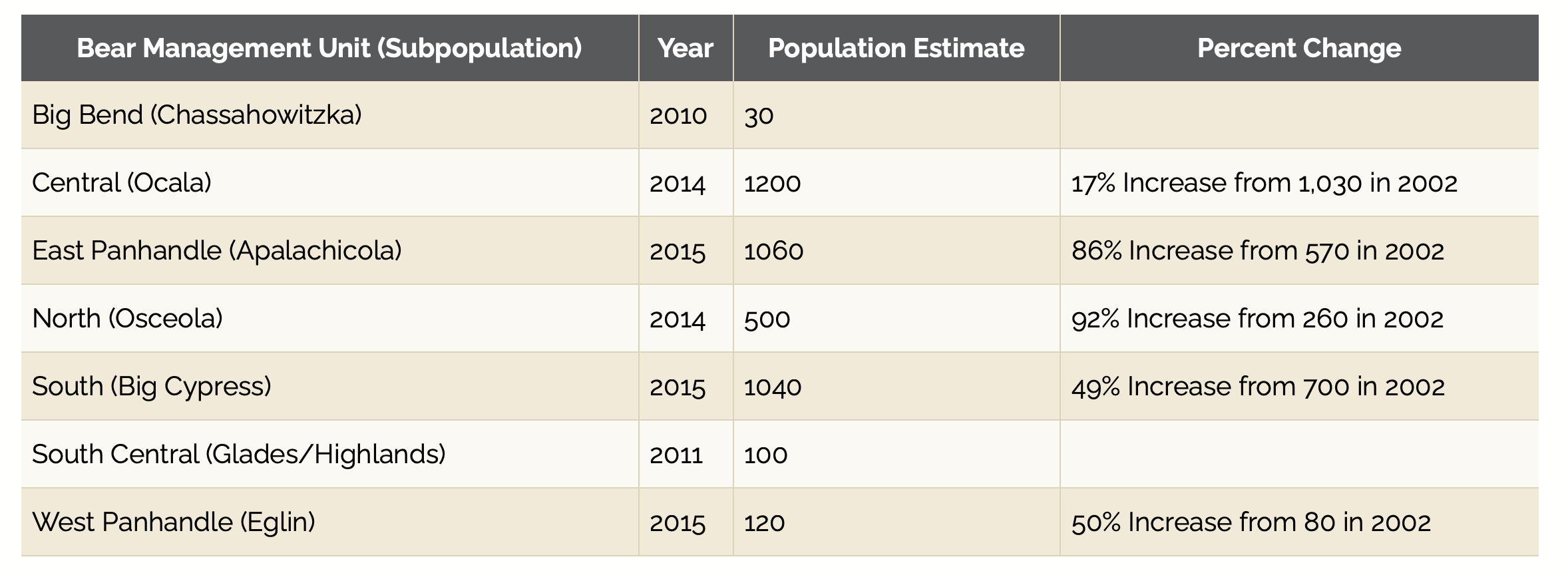
The new rules establish Bear Hunting Zones within four of the seven existing Bear Management Units. One hundred eighty-seven permits will be issued in total across the East Panhandle, North, Central and South BMUs, and each permit will allow the harvest of one bear within the assigned BHZ. Permits will be distributed through a random drawing. Those 18 years and older can apply as many times as they want for $5 per application.
“I am proud that Florida is joining the majority of states that manage black bears with regulated hunting,” said Rodney Barreto, Chairman of the FWC. “The components of the hunt are conservative and prioritize conservation, with a limited number of permits only being issued in the areas of the state with the largest bear populations.”
As one of the management tools included in the 2019 Florida Black Bear Management Plan, regulated hunting will allow the FWC to start managing population growth rates in areas with the largest bear subpopulations. Balancing wildlife numbers with suitable habitat keeps populations healthy. Hunting is an important and effective tool for managing wildlife populations around the world, but it is important to acknowledge that managing bear populations does not manage human-bear conflicts. Conflict prevention and bear management practices will still need to continue.
Guidelines revisions
approved to support
burrowing owl conservation
HAVANA, FL -Yesterday, the Florida Fish and Wildlife Conservation Commission (FWC) approved revisions to the Florida Burrowing Owl Species Conservation Measures and Permitting Guidelines at its August Commission meeting.
The goal of the update is to maximize conservation value of permitting actions, improve regulatory certainty, and streamline the permit review process for stakeholders and FWC staff. Key revisions included standardizing mitigation for projects involving significant habitat modification, expanding options for long-term permitting, and clarifying specific concepts, definitions and requirements.
Guidelines are designed to be a tool for landowners, consultants, agency partners and other interested parties on how to conserve State-designated Threatened species. Recommended conservation measures and survey methods are included to promote actions that benefit these species. These guidelines also include options for avoidance of take and options for permitting that minimize and mitigate unavoidable harm or harassment. Revisions were informed by feedback from stakeholders and agency partners during the update process.
Guidelines also have accompanying Species Action Plans, which outline species-specific actions that aim to minimize impacts from known threats, improve habitat, and strengthen conservation and recovery efforts. These two documents are supporting components of Florida’s Imperiled Species Management Plan.
Florida’s smallest owl species is primarily found in Peninsular Florida with isolated populations in the Panhandle and Keys. Burrowing owls can be found in open areas with short vegetation. The owls use burrows, which are typically 5-10 feet long, for nesting and shelter. The Florida burrowing owl was listed as a State-designated Threatened species in 2017. To learn more about burrowing owls, visit MyFWC.com/WildlifeHabitats, click on “Wildlife,” then “Species Profiles” and select “Burrowing Owl.”
Rule amendments approved
to expand public youth turkey
hunting opportunities
HAVANA, FL – At its August meeting, the Florida Fish and Wildlife Conservation Commission (FWC) approved changes to expand youth turkey hunts from two consecutive days (Saturday and Sunday) to four (Friday through Monday) on 104 wildlife management areas. This change was previously implemented on lands outside of the WMA system for the 2026 youth turkey season. Access will be limited to only youth hunters and supervising adults on 21 WMAs during their youth turkey hunting days.
In June, the FWC surveyed the public about these changes and received over 2,000 responses, with over 80% in support of both proposals. These changes provide additional opportunities for youth with more hunting days. However, they will not increase the total number of youth quota permits issued nor affect WMAs that do not currently have youth turkey hunts.
Visit MyFWC.com/Turkey and click on “Youth Turkey Hunt Weekends” for more information about youth turkey hunting days.
FWC proposes new management
framework for Apalachicola Bay oyster
harvest & statewide rule updates
HAVANA, FL – At its August meeting, the Florida Fish and Wildlife Conservation Commission (FWC) proposed a new management framework for commercial and recreational oyster harvest in Apalachicola Bay and updates for rules that will apply statewide.
Staff recommend reopening Apalachicola Bay’s oyster fishery with annual harvest levels based on oyster abundance to foster ongoing reef recovery. Statewide rule updates will help minimize reef loss and promote good harvest practices.
“We want to be able to get as many boats back in the water as soon as possible, while supporting the bay’s continued recovery and sustainability,” said *FWC Commissioner Preston Farrior*.
The proposed changes for the limited opening of Apalachicola Bay recreational and commercial harvest include:
* Establishing a process to set annual harvest levels for specific reefs in the bay that meet a minimum threshold of oyster abundance.
* Establishing a harvest season with the initial season taking place Jan. 1, 2026 – Feb. 28, 2026, and then continuing with a normal fall season start to be October – February moving forward.
* Requiring a Commercial Apalachicola Bay (AB) Endorsement to commercially harvest oysters from the bay. All qualified applicants will have an opportunity to participate in the 2026 season, and the number of participants in the first year will set the cap for subsequent seasons.
* Establishing an Apalachicola Bay Recreational Opportunity (ABRO) Permit for recreational harvesters who will be selected through a lottery process.
* Establishing reporting requirements for both recreational and commercial harvesters.
The proposed changes for statewide oyster harvest include:
* Updating the culling requirements.
Additional information on the proposed changes can be found on the full Commission Meeting Aug. 13-14 agenda [ https://myfwc.com/about/commission/commission-meetings/august-2025/?utm_content=&utm_medium=email&utm_name=&utm_source=govdelivery&utm_term=campaign ], go to MyFWC.com/About and click on “The Commission” and “Commission Meetings.”
Staff will continue to gather public feedback and will return to the Commission in November for a final public hearing. To provide feedback on the proposed changes to the Apalachicola Bay or statewide oyster harvest, submit comments to the FWC Saltwater Public Comments [ https://myfwc.com/fishing/saltwater/rulemaking/saltwater-public-comments/?utm_content=&utm_medium=email&utm_name=&utm_source=govdelivery&utm_term=campaign ] page or email Marine@MyFWC.com.
Views: 101